
How Crypto Works Without the Hype: A Beginner’s Plain-English Guide
[Disclaimer: This content is provided for informational and educational purposes only and should not be considered financial, investment, legal, or tax advice. Cryptocurrency involves risk, including the potential loss of capital. Market conditions can change rapidly, and past performance is not indicative of future results. Readers should conduct their own research and consult a licensed financial advisor or qualified professional before making any investment or purchasing decisions. The author and publisher are not responsible for any actions taken based on the information presented.]
Cryptocurrency is often talked about in extremes.
Some describe it as the future of money. Others dismiss it as too complex or risky to understand. In reality, crypto sits somewhere in between. It is a digital system for moving and storing value, and while the technology behind it can be complex, the way you use it does not have to be.
This guide focuses on what matters from a beginner’s perspective. Not the hype, not the speculation, but how crypto actually works in a way you can use.

Where Crypto Comes From
Crypto began in 2008 with the release of Bitcoin, introduced as a system for sending money directly between people without relying on banks (Nakamoto, 2008).
The idea was simple. Instead of a central authority verifying transactions, a network of computers would do it collectively. This created a system that could operate globally, without a single point of control.
Since then, thousands of cryptocurrencies have been developed, each with different purposes. Some focus on payments, others on financial services, and some on broader digital applications.
Despite this variety, the basic mechanics remain similar across most cryptocurrencies.
The Role of the Blockchain
At the center of crypto is something called a blockchain.
You can think of it as a shared record of transactions. Every time crypto is sent or received, that transaction is recorded on this system.
What makes it different from a traditional database is that:
- It is distributed across many computers
- It is publicly verifiable
- It is difficult to alter once recorded
This structure allows people to trust the system without needing to trust a central institution.
You don’t need to interact with the blockchain directly. It works in the background every time you use crypto.

What Happens When You Send Crypto
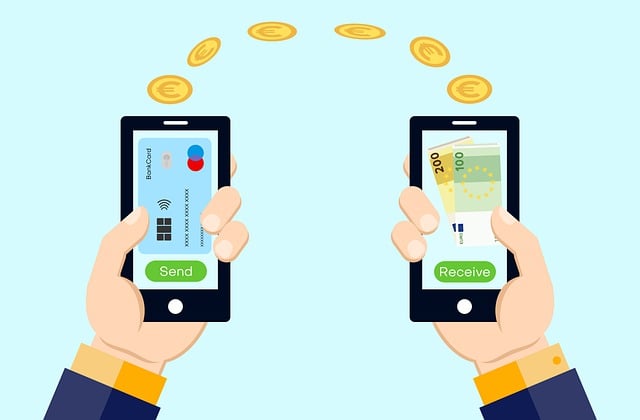
Sending crypto is similar to sending money through a bank, but with fewer intermediaries.
When you send crypto:
- You enter the recipient’s wallet address
- The transaction is submitted to the network
- The network verifies and records it
- The recipient receives the funds
Depending on the cryptocurrency, this can take anywhere from a few seconds to several minutes.
Unlike traditional banking systems, transactions are not limited by working hours or geographic boundaries.
Wallets: Where Your Crypto Lives
To use crypto, you need a wallet.
A wallet is not a physical object. It is a tool that allows you to access and manage your crypto.
There are two main types:
- Custodial wallets
Managed by a platform. You don’t handle the technical side. This is the most common option for beginners. - Non-custodial wallets
You control everything, including security. This offers more independence but requires more responsibility.
Your wallet is connected to:
- A public address, which you share to receive funds
- A private key, which proves ownership and must be kept secure
Losing access to your private key means losing access to your crypto.
Why Crypto Has Value
Crypto does not have value in the same way traditional currencies do.
It is not backed by a government. Instead, its value comes from:
- Supply and demand
- Utility within its network
- Adoption by users and businesses
For example:
- Bitcoin is often used as a store of value
- Ethereum supports applications and automated transactions
- XRP is designed for fast and low-cost transfers
As more people use these systems, their perceived value increases.
How People Actually Use Crypto
While some people focus on investing, crypto also has practical uses.
Today, people use crypto to:
- Send money internationally
- Pay for goods and services in supported locations
- Store value outside traditional banking systems
- Move funds quickly between accounts
Adoption is growing globally. An estimated 420 million people now own cryptocurrency, reflecting its increasing role in modern finance (Triple A, 2023).
In Europe, regulatory developments and growing digital adoption are helping integrate crypto into existing financial systems.

What Makes Crypto Different from Banks
Traditional banking systems rely on intermediaries.
When you send money through a bank, multiple institutions may process the transaction. This can lead to delays, fees, and limitations.
Crypto works differently.
Transactions are processed directly on the network, which can result in:
- Faster transfers
- Lower fees in certain cases
- Fewer restrictions on timing and location
This does not replace banks entirely, but it offers an alternative in situations where speed and flexibility matter.
Risks and Considerations
Crypto is not without risks.
Prices can change quickly, and security depends on how you manage your wallet and access. Unlike banks, there is usually no recovery process if you lose access to your funds.
That’s why starting with a simple, secure setup is important.
Understanding the basics is enough to begin. You do not need to explore every advanced feature immediately.
Making Crypto Easier to Use
For many beginners, the biggest challenge is not understanding crypto. It is dealing with the tools required to use it.
Traditionally, you might need:
- One platform to buy crypto
- Another to store it
- A separate process to send or convert it
This fragmented experience creates unnecessary complexity.
Platforms like eGlobex simplify that process.
Getting Started Without the Complexity
With eGlobex, you can manage the core functions of crypto in one place.
You can:
- Buy cryptocurrencies like Bitcoin, Ethereum, and XRP using fiat
- Store your assets securely within the app without managing private keys
- Send and receive crypto easily, including cross-border transfers
- Convert between crypto and fiat depending on how you want to use your funds
This removes the need to juggle multiple platforms and reduces the learning curve for new users.
If you’re ready to start using crypto in a practical way, you can explore the platform here:
https://myeglobex.com/buy-trade-and-store-crypto-with-eglobex-your-all-in-one-financial-app/
What You Should Focus On First
You do not need to understand everything about crypto to use it effectively.
Start with:
- Learning how to buy crypto
- Understanding how your wallet works
- Sending and receiving small amounts
These steps build confidence quickly and make the rest easier to learn over time.
Where Crypto Stands Today
Crypto is no longer experimental, but it is still evolving.
It exists alongside traditional financial systems, offering alternative ways to move and manage money. In regions like Europe, this coexistence is becoming more structured as regulations and adoption continue to develop.
For beginners, the key is not to overcomplicate it.
Crypto is simply another way to handle value. Once you understand the basics, it becomes less about the technology and more about how you choose to use it.
References (APA 6)
Nakamoto, S. (2008). Bitcoin: A peer-to-peer electronic cash system. Retrieved from https://bitcoin.org/bitcoin.pdf
Triple A. (2023). Global crypto ownership data. Retrieved from https://triple-a.io/crypto-ownership/
European Central Bank. (2024, December 19). Cash remains the most frequently used payment method at the point of sale. Retrieved from https://www.ecb.europa.eu/press/pr/date/2024/html/ecb.pr241219~172b929461.en.html
eGlobex. (n.d.). Buy, trade and store crypto with eGlobex. Retrieved from https://myeglobex.com/buy-trade-and-store-crypto-with-eglobex-your-all-in-one-financial-app/
other blogs

Crypto in Daily Life: What You Can Actually Use It For Today
Explore how crypto is used in daily life in France. Learn real-world use cases, from payments to transfers, and how to start using crypto today.
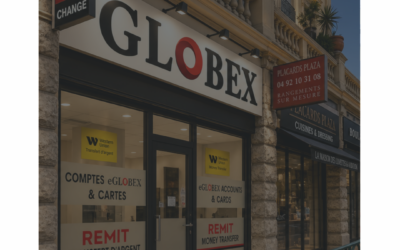
New TO the South of France? Here’s the One Place You Can Walk In, Get Help, and MANAGE YOUR Money
For centuries, people have turned to reliable assets to preserve wealth during uncertain times. Gold has long held this role. It has survived recessions, wars, and inflation, acting as a universal benchmark of value.

Crypto Glossary for Normal People: Terms You Actually Need
For centuries, people have turned to reliable assets to preserve wealth during uncertain times. Gold has long held this role. It has survived recessions, wars, and inflation, acting as a universal benchmark of value.
Money Remittance : How to Send Money to Your eGlobex IBAN
Sending money to your eGlobex account is easier than you might think. Whether you’re abroad or prefer using cash, global money transfer agencies like Western Union, MoneyGram, or Ria make it simple to fund your account quickly and securely.

EGLOBEX CRYPTO WALLETS AVAILABLE SOON
Trace the evolution of cryptocurrency from early cryptography experiments to Bitcoin, Ethereum, DeFi, and institutional adoption. A clear overview of crypto’s history and growth.
A Brief But Comprehensive History of Crypto
Trace the evolution of cryptocurrency from early cryptography experiments to Bitcoin, Ethereum, DeFi, and institutional adoption. A clear overview of crypto’s history and growth.

Crypto in France : Open your eGlobex Crypto Wallet
Discover how crypto payments are evolving in France in 2026 and how digital currency is entering everyday transactions.

Ripple’s Role in Global Transfers: The Business Case for XRP
Learn how Ripple and XRP streamline cross-border payments with faster settlement, lower costs, and real-time liquidity. Explore the business case for modern global transfers.

Crypto in France: How Everyday Payments Are Changing in 2026
Discover how crypto payments are evolving in France in 2026 and how digital currency is entering everyday transactions.
join our newsletter

Services
ABOUT
HELP
Globex is registered in France with the registration number 794844605. Registered Office: 13 BD de la République, 06240 Beausoleil, France. Globex is licensed by the ACPR Banque de France (REGAFI number: 61416). Globex is an official agent (reference number: C141356) of Western Union Ireland (C55075), licensed by the Central Bank of Ireland. Globex is a distributor of PFS Card Services (Ireland) Limited under its E-Money license
The Globex Prepaid Mastercard is issued by PFS Card Services (Ireland) Limited pursuant to a license by Mastercard. PFS Card Services (Ireland) Limited, trading as PCSIL, is authorised and regulated as an issuer of electronic money by the Central Bank of Ireland under registration number C175999. Registered office: EML Payments, 2nd Floor La Vallee House, Upper Dargle Road, Bray, Co. Wicklow, Ireland.

Mastercard and the circles design are registered trademarks of Mastercard International Incorporated.