Crypto Glossary for Normal People: Terms You Actually Need
[Disclaimer: This content is provided for informational and educational purposes only and should not be considered financial, investment, legal, or tax advice. Cryptocurrency involves risk, including the potential loss of capital. Market conditions can change rapidly, and past performance is not indicative of future results. Readers should conduct their own research and consult a licensed financial advisor or qualified professional before making any investment or purchasing decisions. The author and publisher are not responsible for any actions taken based on the information presented.]
Crypto has not always been as accessible as it is today.
It started in 2008, when Bitcoin was introduced as a peer-to-peer digital cash system designed to work without banks. In its early years, adoption was limited, mostly used by developers and early adopters exploring a new financial concept.
Over time, that changed. Cryptocurrencies like Bitcoin, Ethereum, and XRP began to gain wider recognition, not just as digital assets but as tools for payments, transfers, and financial access.
Today, crypto is used by hundreds of millions of people worldwide, with reports from organizations like Triple A estimating over 420 million crypto users globally. At the same time, institutions and payment platforms have started integrating crypto into everyday financial systems, signaling a shift from niche technology to a more recognized form of payment and value exchange.
Crypto is still evolving, but it is no longer experimental. It is part of how people send money, store value, and interact with digital finance.
This glossary focuses only on the terms you actually need to buy, store, and use crypto confidently, without unnecessary complexity.
Core Crypto Terms
- Cryptocurrency – Digital money that exists online. It is not controlled by banks or governments and can be used for payments, transfers, or stored as an asset.
- Blockchain – A public digital record of all crypto transactions. It keeps track of who sent what to whom and cannot be easily altered.
- Bitcoin (BTC) – The first cryptocurrency. Often used as a store of value or long-term investment.
- Ethereum (ETH) – A cryptocurrency that also supports apps and automated transactions beyond simple payments.
- XRP – A cryptocurrency designed for fast and low-cost international transfers.
Getting Started with Crypto
- Wallet – A tool used to store your crypto. This can be an app, platform, or device.
- Custodial Wallet – A wallet managed by a platform (like eGlobex). You don’t need to manage keys yourself. Easier for beginners.
- Non-Custodial Wallet – A wallet where you control everything, including security. More freedom, but more responsibility.
- Private Key – The code that gives access to your crypto. If someone has it, they control your funds. If you lose it, you lose access.
- Public Address – Your receiving address. You share this to receive crypto. Safe to share.
- Seed Phrase – A backup phrase (usually 12–24 words) used to recover your wallet. Must be kept private and secure.
Buying and Selling
- Fiat – Regular money like EUR or USD.
- Buy Crypto – Converting your fiat into cryptocurrency.
- Sell Crypto – Converting your crypto back into fiat.
- Exchange – A platform where you buy, sell, or trade crypto.
- Market Price – The current value of a cryptocurrency based on supply and demand.
Transactions and Usage
- Transaction – Sending crypto from one wallet to another.
- Network – The system that processes crypto transactions (e.g., Bitcoin network, Ethereum network).
- Gas Fee – A fee paid to process transactions, especially on Ethereum. Can vary depending on network activity.
- Transfer – Moving crypto between wallets. Often faster than traditional bank transfers.
- Remittance – Sending money internationally. Crypto is often used here because it can be faster and cheaper.
Storage and Security
- Hot Wallet – A wallet connected to the internet. Easier to use but slightly more exposed.
- Cold Wallet – A wallet not connected to the internet. More secure but less convenient.
- Security – The practice of protecting your crypto. Includes safeguarding your private key and avoiding scams.
Practical Usage Terms
- Payment – Using crypto to pay for goods or services.
- Conversion – Changing one crypto into another or into fiat.
- Liquidity – How easy it is to buy or sell a cryptocurrency without affecting its price.

Terms You’ll Encounter Later
- DeFi (Decentralized Finance) – Financial services built on blockchain without traditional banks.
- Staking – Earning rewards by holding certain cryptocurrencies.
- Smart Contract – Automated programs that execute transactions when conditions are met.
What You Actually Need to Remember
If your goal is to start using crypto through a platform like eGlobex, you don’t need to understand every concept in this glossary right away. What matters is being comfortable with the core actions that let you use crypto confidently in real situations.
With eGlobex, these actions are simplified into a single, integrated experience.
You can:
- Buy cryptocurrencies like Bitcoin, Ethereum, and XRP using fiat, without needing separate exchanges
- Store your crypto securely within the app, without managing private keys or external wallets
- Send and receive crypto easily, whether for personal transfers or cross-border payments
- Convert between crypto and fiat, giving you flexibility depending on how you want to use your funds
Instead of navigating multiple platforms, wallets, and services, everything is handled in one place. This removes much of the complexity that usually comes with getting started in crypto.
The goal is not to learn everything at once. It’s to reach a point where you can:
- Make your first transaction
- Understand where your funds are stored
- Use crypto without hesitation
Once those basics are clear, everything else becomes easier to pick up over time.
Getting Started Without Overthinking It
If you’re new to crypto, the easiest way to apply everything in this glossary is to use a platform that removes the technical barriers.
With eGlobex, you can buy, trade, and store cryptocurrencies like Bitcoin, Ethereum, and XRP in one place, without needing to manage complex setups or multiple tools.
The platform is designed for simplicity. Instead of worrying about wallets, exchanges, and transfers separately, everything is handled within a single app so you can focus on using crypto, not figuring it out.
To get started, visit: https://myeglobex.com/buy-trade-and-store-crypto-with-eglobex-your-all-in-one-financial-app/
References (APA 6)
Triple A. (2023). Global crypto ownership data. Retrieved from https://triple-a.io/crypto-ownership/
Nakamoto, S. (2008). Bitcoin: A peer-to-peer electronic cash system. Retrieved from https://bitcoin.org/bitcoin.pdf
Ethereum Foundation. (n.d.). What is Ethereum? Retrieved from https://ethereum.org/en/what-is-ethereum/
Ripple. (n.d.). What is XRP? Retrieved from https://ripple.com/xrp/
CoinMarketCap. (n.d.). Cryptocurrency glossary. Retrieved from https://coinmarketcap.com/alexandria/glossary
Investopedia. (n.d.). Cryptocurrency definition. Retrieved from https://www.investopedia.com/terms/c/cryptocurrency.asp
eGlobex. (n.d.). Buy, trade and store crypto with eGlobex. Retrieved from https://myeglobex.com/buy-trade-and-store-crypto-with-eglobex-your-all-in-one-financial-app/
other blogs

Crypto in Daily Life: What You Can Actually Use It For Today
Explore how crypto is used in daily life in France. Learn real-world use cases, from payments to transfers, and how to start using crypto today.

How Crypto Works Without the Hype: A Beginner’s Plain-English Guide
Learn how crypto works in simple terms. This beginner-friendly guide explains how to buy, store, and use crypto without the hype or technical jargon.
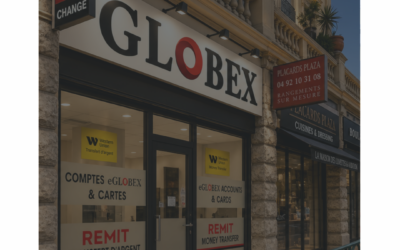
New TO the South of France? Here’s the One Place You Can Walk In, Get Help, and MANAGE YOUR Money
For centuries, people have turned to reliable assets to preserve wealth during uncertain times. Gold has long held this role. It has survived recessions, wars, and inflation, acting as a universal benchmark of value.
Money Remittance : How to Send Money to Your eGlobex IBAN
Sending money to your eGlobex account is easier than you might think. Whether you’re abroad or prefer using cash, global money transfer agencies like Western Union, MoneyGram, or Ria make it simple to fund your account quickly and securely.

EGLOBEX CRYPTO WALLETS AVAILABLE SOON
Trace the evolution of cryptocurrency from early cryptography experiments to Bitcoin, Ethereum, DeFi, and institutional adoption. A clear overview of crypto’s history and growth.
A Brief But Comprehensive History of Crypto
Trace the evolution of cryptocurrency from early cryptography experiments to Bitcoin, Ethereum, DeFi, and institutional adoption. A clear overview of crypto’s history and growth.
Crypto in France : Open your eGlobex Crypto Wallet
Discover how crypto payments are evolving in France in 2026 and how digital currency is entering everyday transactions.

Ripple’s Role in Global Transfers: The Business Case for XRP
Learn how Ripple and XRP streamline cross-border payments with faster settlement, lower costs, and real-time liquidity. Explore the business case for modern global transfers.

Crypto in France: How Everyday Payments Are Changing in 2026
Discover how crypto payments are evolving in France in 2026 and how digital currency is entering everyday transactions.
join our newsletter

Services
ABOUT
HELP
Globex is registered in France with the registration number 794844605. Registered Office: 13 BD de la République, 06240 Beausoleil, France. Globex is licensed by the ACPR Banque de France (REGAFI number: 61416). Globex is an official agent (reference number: C141356) of Western Union Ireland (C55075), licensed by the Central Bank of Ireland. Globex is a distributor of PFS Card Services (Ireland) Limited under its E-Money license
The Globex Prepaid Mastercard is issued by PFS Card Services (Ireland) Limited pursuant to a license by Mastercard. PFS Card Services (Ireland) Limited, trading as PCSIL, is authorised and regulated as an issuer of electronic money by the Central Bank of Ireland under registration number C175999. Registered office: EML Payments, 2nd Floor La Vallee House, Upper Dargle Road, Bray, Co. Wicklow, Ireland.
Mastercard and the circles design are registered trademarks of Mastercard International Incorporated.