Gold vs Bitcoin: Which Is the Modern Store of Value?
[Note: This is not financial advice. Consult your financial advisor before making any big purchase/ investment.]
For centuries, people have turned to reliable assets to preserve wealth during uncertain times. Gold has long held this role. It has survived recessions, wars, and inflation, acting as a universal benchmark of value.
But in the last decade, Bitcoin has emerged as a digital alternative. Where gold represents history and physical scarcity, Bitcoin offers technology, portability, and accessibility. Both aim to protect value, but they do so in very different ways.
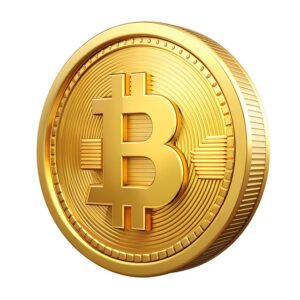
Gold: The Original Safe Haven
Gold has symbolized stability for thousands of years. It is tangible, scarce, and globally recognized. Many investors rely on it as a hedge during inflation or economic stress. Its liquidity makes it easy to trade, and central banks continue to hold large reserves.
But gold also comes with limitations. It requires secure storage and insurance, and moving it across borders can be slow and costly. While reliable, its growth is steady rather than exponential. Gold excels at preserving value, not multiplying it.
Bitcoin: The Digital Alternative
Bitcoin, created in 2009, introduced a decentralized way to store and transfer value. Built on blockchain technology, it records transactions transparently without relying on banks or governments. Its fixed supply of 21 million coins mirrors the scarcity that gives gold its appeal.
Bitcoin’s strengths lie in speed, divisibility, and global accessibility. Anyone with internet access can send or receive it within minutes, with no physical storage needed. This has helped Bitcoin evolve into a digital counterpart of gold, attracting investors looking for portability and long-term potential.
Still, Bitcoin is not without risk. Its price can fluctuate sharply, and regulations continue to develop. Cybersecurity remains essential. Yet despite volatility, its performance over the past decade has made it a compelling candidate in discussions about the future of value.

Comparing the Two: Tangible vs Digital Value
Gold and Bitcoin represent two eras of wealth preservation. Gold’s scarcity comes from nature; Bitcoin’s from code. Gold offers physical permanence, while Bitcoin offers digital durability supported by a global network.
In terms of accessibility, Bitcoin is easier to transfer and trade instantly across borders. Gold still depends on intermediaries and logistics. Bitcoin’s biggest drawback is volatility, while gold’s is limited growth. One offers stability, the other offers the possibility of faster appreciation.
Both are recognized as stores of value, but they serve different investor profiles.
What “Store of Value” Means in 2026
Today’s definition goes beyond simply “holding worth over time.” A modern store of value should be portable, inflation-resistant, and adaptable to a digital economy. Gold provides stability rooted in history. Bitcoin provides security through decentralization and predictable supply.
Many investors now view them as complementary. Gold offers steadiness; Bitcoin offers upside and flexibility. Together, they reflect how value preservation has expanded from the physical world to the digital one.
The Role of Technology and Regulation
Bitcoin’s rise is closely linked to technological innovation, but regulation is shaping its path forward. Governments are introducing clearer frameworks, and Bitcoin’s presence in payment networks and investment products like ETFs signals growing acceptance.
This doesn’t diminish gold’s relevance. Instead, it shows how both assets coexist. Gold remains the anchor of traditional finance. Bitcoin represents how value is evolving for a digital-first world.
Discover eGlobex
eGlobex makes it easier for beginners to explore digital assets safely. With EU standards, multi-asset wallets, and instant transfers, users can buy, sell and manage Bitcoin alongside other cryptocurrencies, foreign currencies like GBP, USD, and their fiat payment account: all in one app!
The Evolution of Value
Gold and Bitcoin may be different, but they respond to the same human need: security in an uncertain world. Gold offers history and permanence. Bitcoin offers innovation and future potential.
For many investors, the strongest approach is not choosing between them but holding both. Gold provides stability during market downturns, while Bitcoin offers higher long-term growth potential driven by digital adoption. Together, they balance each other’s weaknesses, creating a more resilient strategy for preserving value in a world where both financial systems and technology continue to evolve.
To explore digital assets safely and confidently, visit eGlobex. The landscape of value is changing, and the choice of where to store it is now more flexible than ever.
other blogs

Crypto in Daily Life: What You Can Actually Use It For Today
Explore how crypto is used in daily life in France. Learn real-world use cases, from payments to transfers, and how to start using crypto today.

How Crypto Works Without the Hype: A Beginner’s Plain-English Guide
Learn how crypto works in simple terms. This beginner-friendly guide explains how to buy, store, and use crypto without the hype or technical jargon.
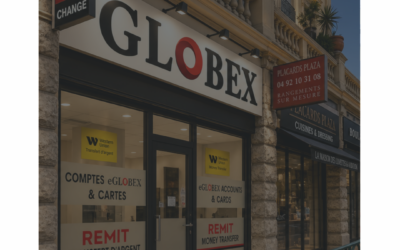
New TO the South of France? Here’s the One Place You Can Walk In, Get Help, and MANAGE YOUR Money
For centuries, people have turned to reliable assets to preserve wealth during uncertain times. Gold has long held this role. It has survived recessions, wars, and inflation, acting as a universal benchmark of value.

Crypto Glossary for Normal People: Terms You Actually Need
For centuries, people have turned to reliable assets to preserve wealth during uncertain times. Gold has long held this role. It has survived recessions, wars, and inflation, acting as a universal benchmark of value.
Money Remittance : How to Send Money to Your eGlobex IBAN
Sending money to your eGlobex account is easier than you might think. Whether you’re abroad or prefer using cash, global money transfer agencies like Western Union, MoneyGram, or Ria make it simple to fund your account quickly and securely.

EGLOBEX CRYPTO WALLETS AVAILABLE SOON
Trace the evolution of cryptocurrency from early cryptography experiments to Bitcoin, Ethereum, DeFi, and institutional adoption. A clear overview of crypto’s history and growth.
A Brief But Comprehensive History of Crypto
Trace the evolution of cryptocurrency from early cryptography experiments to Bitcoin, Ethereum, DeFi, and institutional adoption. A clear overview of crypto’s history and growth.
Crypto in France : Open your eGlobex Crypto Wallet
Discover how crypto payments are evolving in France in 2026 and how digital currency is entering everyday transactions.
Ripple’s Role in Global Transfers: The Business Case for XRP
Learn how Ripple and XRP streamline cross-border payments with faster settlement, lower costs, and real-time liquidity. Explore the business case for modern global transfers.
join our newsletter

Services
ABOUT
HELP
Globex is registered in France with the registration number 794844605. Registered Office: 13 BD de la République, 06240 Beausoleil, France. Globex is licensed by the ACPR Banque de France (REGAFI number: 61416). Globex is an official agent (reference number: C141356) of Western Union Ireland (C55075), licensed by the Central Bank of Ireland. Globex is a distributor of PFS Card Services (Ireland) Limited under its E-Money license
The Globex Prepaid Mastercard is issued by PFS Card Services (Ireland) Limited pursuant to a license by Mastercard. PFS Card Services (Ireland) Limited, trading as PCSIL, is authorised and regulated as an issuer of electronic money by the Central Bank of Ireland under registration number C175999. Registered office: EML Payments, 2nd Floor La Vallee House, Upper Dargle Road, Bray, Co. Wicklow, Ireland.

Mastercard and the circles design are registered trademarks of Mastercard International Incorporated.